Launch ceremony for six OFVi thesis projects in Congo
Launch ceremony for six OFVi thesis projects in Congo
12 February 2026
Brazzaville
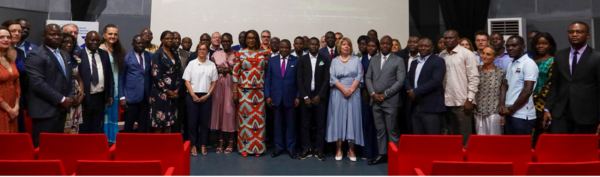
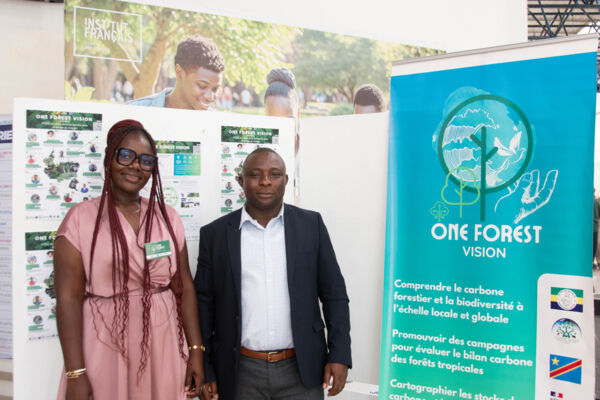
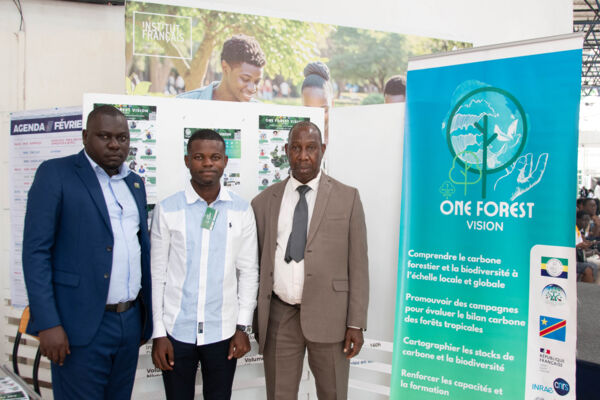
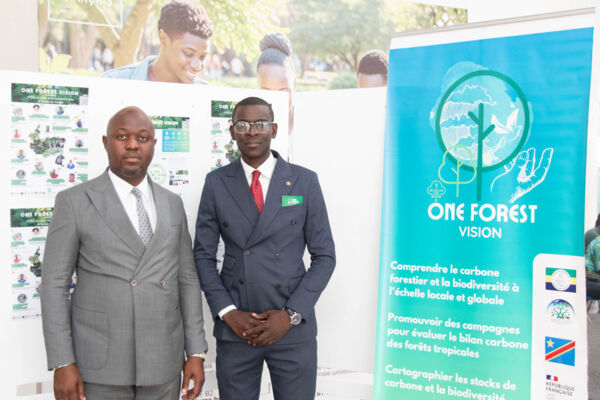
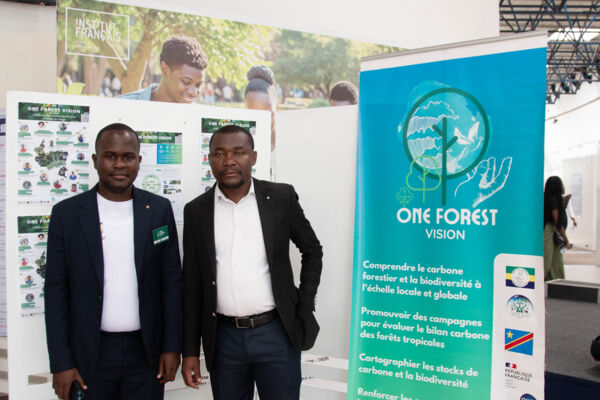
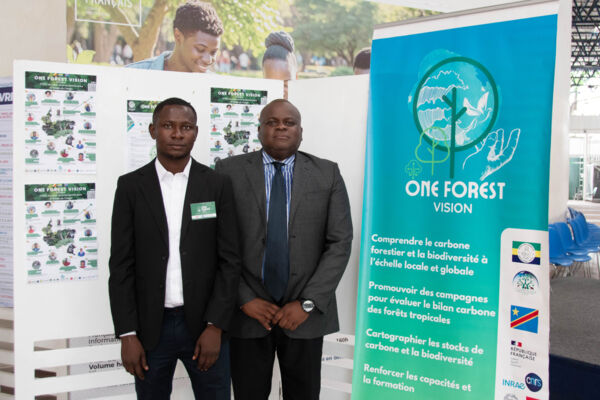
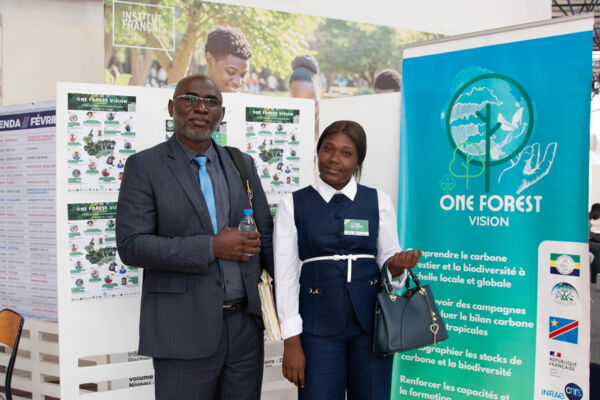
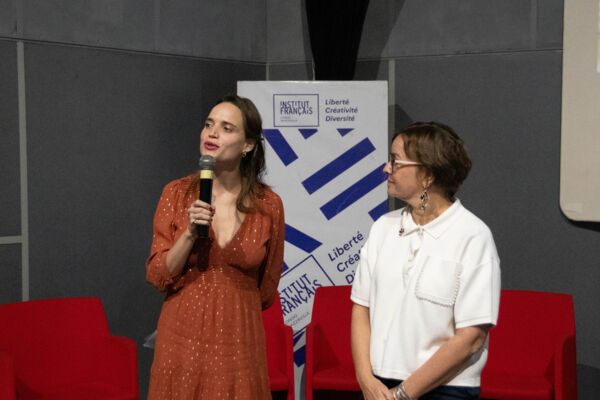
On 12 February 2026, the French Institute of Congo in Brazzaville hosted the official launch ceremony for six thesis projects supported by the One Forest Vision (OFVi) initiative and co-financed by the French Embassy in the Republic of Congo.
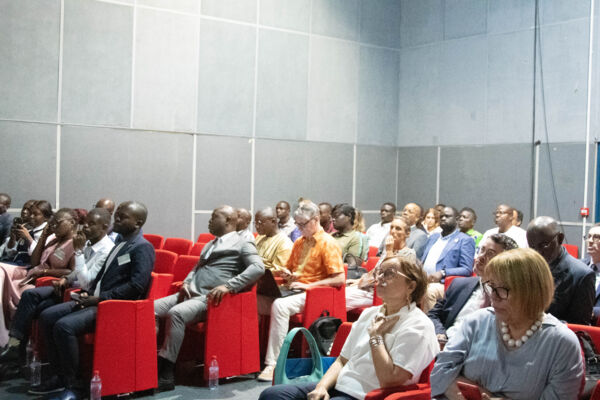
Around fifty participants — scientists, doctoral students, supervisors and representatives from universities and institutions — gathered for this event, which was attended by the Minister for Higher Education, Ms Edith EMMANUEL, the Minister for Scientific Research and Technological Innovation, Mr Rigobert MABOUNDOU, and Ms Claire BODONYI, French Ambassador to the Republic of Congo.
The scientific community was widely represented by researchers from universities and institutes in both Congos — notably ERAIFT, IRF, INERA-UPN, UDSN, UMNG (ENS and FST), UNIKIN, and UNIKIS — as well as by the programme's international partners, including CIRAD. The cooperation and cultural action departments (SCAC) of the French Embassies in Congo and the Democratic Republic of Congo (DRC) were also present, highlighting the strategic importance of regional scientific cooperation.
Representatives from the private sector and NGOs, including ATIBT, Olam-Agri and WCS, took part in the discussions, demonstrating the interest of economic actors and civil society in issues related to sustainable forest management.
Finally, friends and family members of the doctoral students attended their presentations, adding a human and collective dimension to this ceremony marking an important milestone in their scientific careers.
The morning began with an opening speech by Ms Claire Bodonyi, French Ambassador to the Republic of Congo, who praised the commitment of young researchers and reiterated the strategic importance of scientific research in the current climate context. She emphasised that a better understanding of forests leads to better preservation, stressing the fundamental role of science in informing public environmental policy.
The speeches given by the officials present then highlighted the positive momentum of scientific cooperation between the Republic of Congo and its partners, while offering words of encouragement to the six doctoral students involved in this work, which is strategic for the future of the forests of the Congo Basin.
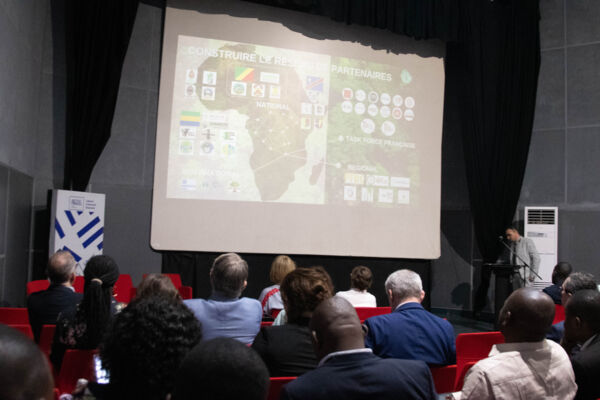
The institutional segment continued with a presentation by Guillaume Lescuyer, OFVi co-coordinator, who outlined the programme's objectives, its positioning in relation to other regional initiatives and its ambition to produce applied research that is useful to public decision-makers.
Vivien Rossi (CIRAD), OFVi representative in Congo, then detailed the activities already underway in the country as well as the prospects for rolling out the programme on a regional scale.
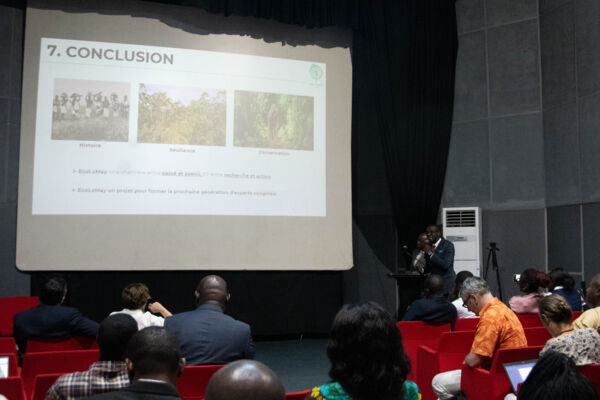
The six thesis topics were then presented by the doctoral students and/or their supervisors in a concise and dynamic format tailored to an institutional audience, highlighting their research questions, methodology and expected results.
These presentations illustrated the diversity of scientific issues addressed by OFVi in Congo:
1. Emmafie Bonda, a doctoral student working on the BioDiv-Congo project led by Dr Gaël Bouka, is dedicated to the conservation, sustainable management and promotion of tropical forest fruit trees in the Congo Basin:
2. Abel Mouyabi, a PhD student working on the DyForDrone project led by Professors Jean-Joël Loumeto and Grace Jopaul Loubouta Panzou, analyses forest carbon dynamics in Loundoungou, in northern Congo, using data from drones and field surveys:
3. Fréjusse Miassouka, a doctoral student working on the EcoLoMay project led by Dr Nehl Kobawila, is studying the long-term response of the Mayombe forests to climate change and anthropogenic pressures:
4. Samuel Kayes, a PhD student working on the Mounds project led by Dr Yannick Bocko, is exploring raised fields as indicators of past anthropogenic impacts on peatlands in the central Congo Basin:
5. Maurice Bakala, a PhD student working on the Plasticity project led by Dr Garel Makouanzi, is examining the macro- and microscopic responses of commercial and secondary forest species to environmental changes:
6. Grace Bobangui, a doctoral student working on the TropiCO2 project led by Dr Suspense Ifo, is studying primary productivity and soil respiration in the peat forests of the Congo Basin:
The morning concluded with a cocktail reception at the French Institute of Congo, following the thesis presentations. This informal gathering allowed participants to continue their discussions in a relaxed setting.
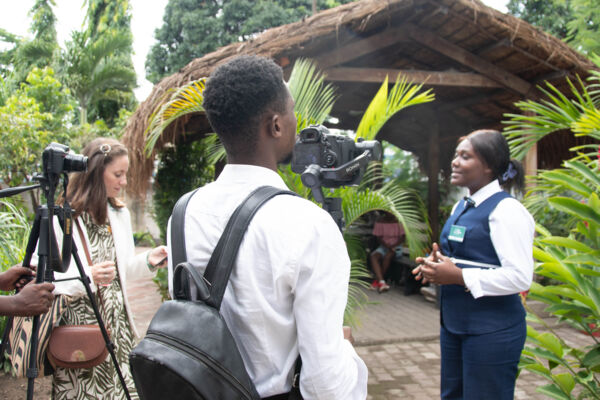
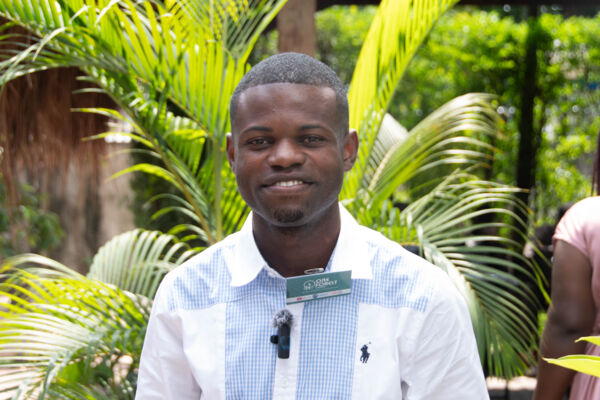
Video clips dedicated to each doctoral student will soon be broadcast on OFVi networks to present their work in a more tangible way, with images from the field and interviews.
Towards scientific complementarity: Gabon – Congo – DRC
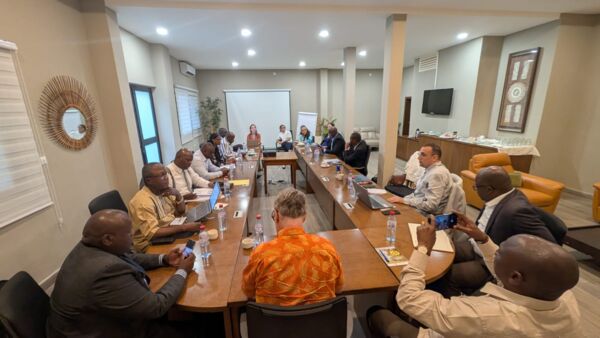
In the afternoon, a scientific meeting was held at the Hippocampe Hotel to prepare for the operational launch of OFVi in the Democratic Republic of Congo (DRC) and to ensure scientific consistency between OFVi's activities in the two countries.
Discussions identified several priority themes in the DRC:
Ecological characterisation and dynamics of peatlands, which have been little studied in terms of fauna and the impact of human activities;
Monitoring of fauna and game (camera traps, socio-ecological surveys);
Sustainability of agricultural and agroforestry value chains (cocoa, maize);
Ecological impacts of hydrological variations;
Ecological rehabilitation of mining sites.
Discussions also focused on OFVi's support mechanisms: funding for complete theses, support for work already underway, technical training (scientific writing, bibliography, rational AI), and cross-participation in thesis committees between Congo and the DRC.
Launch of a series of conferences between the two Congos
Among the concrete prospects discussed was the establishment of a joint conference cycle between Congo-Brazzaville and the DRC, aimed at promoting the research work supported by OFVi and disseminating knowledge more widely beyond academic circles.
This initiative was presented by Marjorie Le Bars and Marie Normand, respectively scientific and academic cooperation attachés and cooperation attachés for the environment at the SCACs in Congo and the DRC.
The meeting concluded in the presence of representatives from the SCACs of the French Embassies in both countries, who reiterated the need to strengthen communication with the general public and encourage regional scientific synergies.
The ambition is clear: to increase scientific visibility across the Congo Basin, promote inter-university collaboration and create a structured space for dialogue between science, society and public decision-makers.
By browsing our site you accept the installation and use cookies on your computer.
Know more
Our use of cookies
Cookies are a set of data stored on a user’s device when the user browses a web site. The data is in a file containing an ID number, the name of the server which deposited it and, in some cases, an expiry date. We use cookies to record information about your visit, language of preference, and other parameters on the site in order to optimise your next visit and make the site even more useful to you.
To improve your experience, we use cookies to store certain browsing information and provide secure navigation, and to collect statistics with a view to improve the site’s features. For a complete list of the cookies we use, download “Ghostery”, a free plug-in for browsers which can detect, and, in some cases, block cookies.
You can also visit the CNIL web site for instructions on how to configure your browser to manage cookie storage on your device.
In the case of third-party advertising cookies, you can also visit the following site: https://www.youronlinechoices.com/fr/controler-ses-cookies/, offered by digital advertising professionals within the European Digital Advertising Alliance (EDAA). From the site, you can deny or accept the cookies used by advertising professionals who are members.
It is also possible to block certain third-party cookies directly via publishers:
Cookie type
Means of blocking
Analytical and performance cookies
Realytics Google Analytics Spoteffects Optimizely
Targeted advertising cookies
DoubleClick Mediarithmics
The following types of cookies may be used on our websites:
Mandatory cookies
Functional cookies
Social media and advertising cookies
These cookies are needed to ensure the proper functioning of the site and cannot be disabled. They help ensure a secure connection and the basic availability of our website.
These cookies allow us to analyse site use in order to measure and optimise performance. They allow us to store your sign-in information and display the different components of our website in a more coherent way.
These cookies are used by advertising agencies such as Google and by social media sites such as LinkedIn and Facebook. Among other things, they allow pages to be shared on social media, the posting of comments, and the publication (on our site or elsewhere) of ads that reflect your centres of interest.
Our EZPublish content management system (CMS) uses CAS and PHP session cookies and the New Relic cookie for monitoring purposes (IP, response times). These cookies are deleted at the end of the browsing session (when you log off or close your browser window)
Our EZPublish content management system (CMS) uses the XiTi cookie to measure traffic. Our service provider is AT Internet. This company stores data (IPs, date and time of access, length of the visit and pages viewed) for six months
Our EZPublish content management system (CMS) does not use this type of cookie.
For more information about the cookies we use, contact INRAE’s Data Protection Officer by email at cil-dpo@inra.fr or by post at:
INRAE 24, chemin de Borde Rouge –Auzeville – CS52627 31326 Castanet Tolosan cedex - France