From the Congo Basin to the Amazon: Nadège Mézié’s perspective on inter-basin cooperation
From the Congo Basin to the Amazon: Nadège Mézié’s perspective on inter-basin cooperation
The Amazon and the Congo Basin are home to an exceptional proportion of the world’s biodiversity and play a major role in maintaining the climate balance. Despite their different contexts, the scientific communities in these two major basins face many common challenges: understanding the effects of climate change, improving our knowledge of and monitoring biodiversity and forests, involving local communities in research, and strengthening scientific capacity.
Translated with DeepL.com (free version)
To explore possible links between these regions, we put three questions to Nadège Mézié, a PhD holder in anthropology and a specialist in scientific cooperation and diplomacy. Since April 2025, she has been an International Technical Expert at the Franco-Brazilian Centre for Amazonian Biodiversity (CFBBA), where she helps to develop academic and scientific cooperation between French and Brazilian stakeholders engaged in research in the Amazon. As a point of contact for the One Forest Vision initiative for the Amazon Basin, she also offers her perspective on potential links with the scientific communities of the Congo Basin.
Three questions for Nadège Mézié
What are the major research challenges common to the Amazon and the Congo Basin?
The Congo Basin and the Amazon Basin share ecosystems with numerous similarities. Both regions are exceptional biodiversity hotspots and face similar threats linked to climate change and human activities, the pressures of which are becoming increasingly acute (deforestation, pollution, mining and oil extraction, unplanned urbanisation, monocultures, etc.), which could, if nothing is done, lead to the disappearance of these forests in the medium to long term. The need for science, field research, modelling and training has never been more pressing in these regions. In both cases, the same research needs and new research approaches are emerging, fostering close dialogue between science and society: understanding biodiversity; understanding the impacts of climate change on tropical ecosystems and their resilience to these changes; and the preservation of biodiversity (involving multiple levels: local communities, public policy at various administrative levels, international law and agreements, the private sector), the promotion of natural products in line with sustainable development principles, the involvement of local communities in research, training for local young people, dialogue between traditional knowledge and so-called academic knowledge; the intertwining of social and environmental issues (the tropical forests of the Congo Basin are inhabited, just like those in Brazil – there are no fewer than 20 million inhabitants in the Brazilian Amazon); and the impossibility of separating research on forests and wetlands from issues of urbanisation and infrastructure. Nothing can therefore further delay the convergence of scientific research on and concerning the Congo Basin with that conducted on and concerning the Amazon Basin.
How could we further encourage the sharing of experiences between the scientific communities in the two basins?
How can we encourage two scientific communities that have not traditionally worked together – such as those in the Congo Basin and the Amazon Basin – to engage with one another, find common ground for collaboration, and develop tools that serve as a bridge to initiate or accelerate their first collaborative efforts? Engaging in dialogue, sharing experiences and collaborating all require that we know our partner; that we have a reasonable understanding of their methods, the expertise and teams they will mobilise, and the infrastructure to which they have access. Collaboration means engaging with colleagues who embody academic traditions, are part of a scientific world structured at local and national levels, and navigate international research networks. Collaboration also means demonstrating trust; without trust, there can be no academic or scientific cooperation. Two institutions may wish to enter into an agreement, but if the researchers themselves do not recognise one another or discover the academic affinities necessary for joint work, the cooperation is doomed to failure. There is therefore preparatory work involved, which consists of making initial contact, bringing people together and facilitating their interaction.
This first stage requires simple initiatives such as matchmaking webinars, exploratory visits and short reciprocal exchanges. Ideally, all these initiatives should be combined: a webinar can never replace a face-to-face meeting. From this initial encounter, one often emerges with a clear sense of whether it will work or not, whether it will take off or not, and whether there has been a ‘match’. For indeed, in those initial encounters between researchers who do not know one another and have not yet worked together, there is something akin to courtship: simply conducting research on the same topics or on related subjects is not enough. Alongside these initiatives, which enable cooperation to begin, there must be others that can take their place, allowing the relationships that have been established to be both structured and institutionalised.
Measures such as long-term mobility schemes for researchers and students, joint supervision or co-supervision, joint research projects, or activities that enable the relationship to be maintained on a regular basis (shared online or face-to-face seminars on methodological and/or theoretical aspects, conferences or other scientific events running over several editions, summer schools and other theoretical and/or field-based training programmes) can then be utilised . Tropical ecology and, more generally, everything relating to climate change and biodiversity requires the collection and collation of data on platforms; ensuring that this data is shared in accordance with FAIR principles is also a key collaborative challenge, particularly in a South-South context.
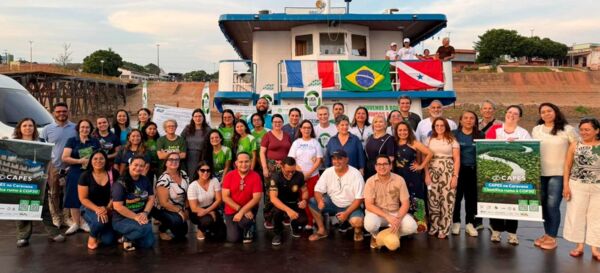
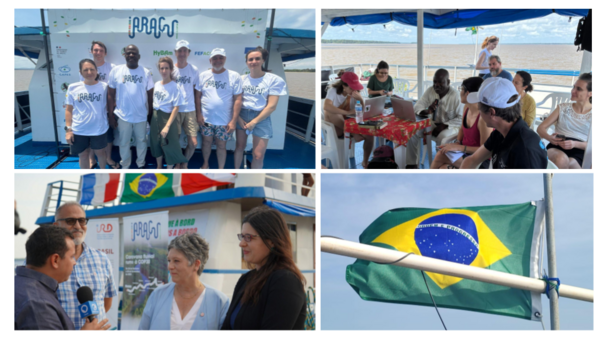
All of these initiatives are most often established within the framework of cooperation agreements or MoUs. Researchers work together, whilst their institutions provide a legal framework, support and recognition for the collaboration. The CFBBA, together with OFVi, has initiated the first steps towards bringing the two communities closer together, through the participation of Gabonese and Congolese researchers at COP 30 in Belém, the Iaraçu river caravan, and their involvement in events and round-table discussions that brought these researchers together with their Brazilian counterparts. We are also in the process of creating, in partnership with UVED (Virtual University on the Environment and Sustainable Development) and CAPES (the Brazilian agency for the funding of higher education), a MOOC dedicated to tropical forests and wetlands, which will bring together the expertise of scientists from the Congo Basin, France and Brazil.
In the longer term, how do you envisage more structured scientific cooperation between the Amazon and the Congo Basin?
As I pointed out in my answer to the first question, there is no shortage of common research topics; however, collaboration is all the more enriching and fruitful when partners share experiences, methods and unique innovations, which, when brought together, contribute to processes of cross-fertilisation. It is quite clear that the two river basins in question can benefit from these positive and productive effects! To structure this cooperation and ensure its long-term sustainability, one might envisage a major, multi-faceted and interdisciplinary inter-basin research programme, based not only on joint research projects but also on the systematic sharing of experience integrated into research processes (methods, technologies, working with local communities), on short- and long-term mobility schemes that are as reciprocal as possible (scholarships, chairs, Brazilian visiting professors in countries of the Congo Basin and African scientists at Brazilian institutions), the creation of dual degrees, and the organisation of shared seminars and courses in a hybrid format. This kind of inter-basin cooperation must lead us to innovate in the ways we collaborate, to consider new North-South, South-South and North-South-South configurations, and to reaffirm that science unites us – between nations and between continents – and that it must enable us to maintain a caring and generous relationship with non-humans (both living and non-living).
Nadège Mézié holds a PhD in anthropology from Paris Cité University. Her thesis focused on the Haitian peasantry and its relationship with religion. She subsequently undertook several postdoctoral stays in Brazil, notably at UFRGS, PUCRS and Unicamp.
In 2020, she joined the French Consulate-General in São Paulo as a science and technology attaché, marking a shift towards scientific diplomacy. In 2024, she became an adviser on international relations to the presidency of FAPESP, the São Paulo State Research Funding Foundation.
Since April 2025, she has been an International Technical Expert (ETI) at the Franco-Brazilian Centre for Amazonian Biodiversity (CFBBA). There, alongside her Brazilian colleagues, she manages the Centre’s secretariat and contributes to the development of academic and scientific cooperation between French stakeholders — particularly those from French Guiana — and Brazilian institutions engaged in research in the Amazon. Her work involves dividing her time between Brasília and various regions of the Amazon.
For Nadège Mézié, working to promote scientific and academic cooperation in the Amazon is not merely a matter of negotiating agreements between institutions or setting up funding schemes. It also, and above all, relies on human relationships, on-the-ground encounters and a detailed understanding of the local realities within which science is developed.
She is also secretary to the board of directors of the Agence Universitaire de la Francophonie in Brazil and a member of the Ethics Committee of the Pasteur Institute in São Paulo.
Launched in March 2024 by the French and Brazilian presidents, the Franco-Brazilian Centre for Amazonian Biodiversity (CFBBA) aims to strengthen scientific cooperation between France and Brazil for the study and conservation of biodiversity in the Amazon. In particular, it encourages collaboration between French Guiana and the neighbouring Brazilian states of Amapá, Amazonas, Pará and Roraima.
The Centre brings together universities, research institutes and scientific stakeholders around five key themes: biodiversity; the knowledge of indigenous peoples and local communities; Earth observation, forests and climate change; biodiversity, health and food; and the bioeconomy.
These themes directly echo the research being carried out in the Congo Basin by the scientific communities of the One Forest Vision (OFVi) initiative. The CFBBA thus provides an interesting example for exploring new inter-basin cooperation, based on the sharing of knowledge, methods and experiences.
The French National Research Institute for Sustainable Development (IRD) has been active in Brazil for several decades, developing scientific cooperation centred on the relationships between societies and their environment, with a view to sustainable development and in line with the Sustainable Development Goals (SDGs).
Based on an interdisciplinary approach, the projects carried out with Brazilian partners cover a wide range of issues: climate change, biodiversity and tropical ecosystems, water resources, land use, food security, natural hazards, environmental health, migration and social inequalities.
Cooperation is particularly dynamic, with over 40 joint research projects, 30 expatriate scientists and more than 213 missions per year. Based in Brasília, the IRD’s representative office liaises with the main Brazilian scientific cooperation institutions and the French Embassy, whilst supporting researchers and partners in developing their collaborations.
Since 1 September 2023, Abdelfettah Sifeddine has been the IRD’s representative in Brazil. A geologist and researcher at the IRD since 1994, specialising in climate variability in Latin America, he works with the team at the representative office in Brasília to ensure the Institute’s institutional representation, support Franco-Brazilian projects and strengthen links between the scientific communities of the two countries.
Find out more: https://www.ird.fr/bresil
By browsing our site you accept the installation and use cookies on your computer.
Know more
Our use of cookies
Cookies are a set of data stored on a user’s device when the user browses a web site. The data is in a file containing an ID number, the name of the server which deposited it and, in some cases, an expiry date. We use cookies to record information about your visit, language of preference, and other parameters on the site in order to optimise your next visit and make the site even more useful to you.
To improve your experience, we use cookies to store certain browsing information and provide secure navigation, and to collect statistics with a view to improve the site’s features. For a complete list of the cookies we use, download “Ghostery”, a free plug-in for browsers which can detect, and, in some cases, block cookies.
You can also visit the CNIL web site for instructions on how to configure your browser to manage cookie storage on your device.
In the case of third-party advertising cookies, you can also visit the following site: https://www.youronlinechoices.com/fr/controler-ses-cookies/, offered by digital advertising professionals within the European Digital Advertising Alliance (EDAA). From the site, you can deny or accept the cookies used by advertising professionals who are members.
It is also possible to block certain third-party cookies directly via publishers:
Cookie type
Means of blocking
Analytical and performance cookies
Realytics Google Analytics Spoteffects Optimizely
Targeted advertising cookies
DoubleClick Mediarithmics
The following types of cookies may be used on our websites:
Mandatory cookies
Functional cookies
Social media and advertising cookies
These cookies are needed to ensure the proper functioning of the site and cannot be disabled. They help ensure a secure connection and the basic availability of our website.
These cookies allow us to analyse site use in order to measure and optimise performance. They allow us to store your sign-in information and display the different components of our website in a more coherent way.
These cookies are used by advertising agencies such as Google and by social media sites such as LinkedIn and Facebook. Among other things, they allow pages to be shared on social media, the posting of comments, and the publication (on our site or elsewhere) of ads that reflect your centres of interest.
Our EZPublish content management system (CMS) uses CAS and PHP session cookies and the New Relic cookie for monitoring purposes (IP, response times). These cookies are deleted at the end of the browsing session (when you log off or close your browser window)
Our EZPublish content management system (CMS) uses the XiTi cookie to measure traffic. Our service provider is AT Internet. This company stores data (IPs, date and time of access, length of the visit and pages viewed) for six months
Our EZPublish content management system (CMS) does not use this type of cookie.
For more information about the cookies we use, contact INRAE’s Data Protection Officer by email at cil-dpo@inra.fr or by post at:
INRAE 24, chemin de Borde Rouge –Auzeville – CS52627 31326 Castanet Tolosan cedex - France