In Kinshasa, OFVi is laying the foundations for a scientific roadmap for the DRC
Kinshasa: an inaugural OFVi scientific co-creation workshop to establish priorities in the DRC
From 31 Mar. 2026 to 01 Apr. 2026
Kinshasa
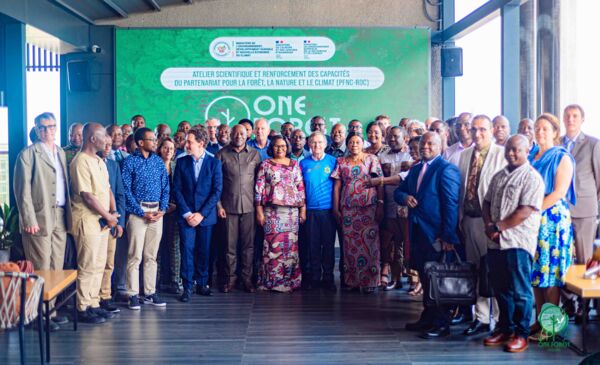
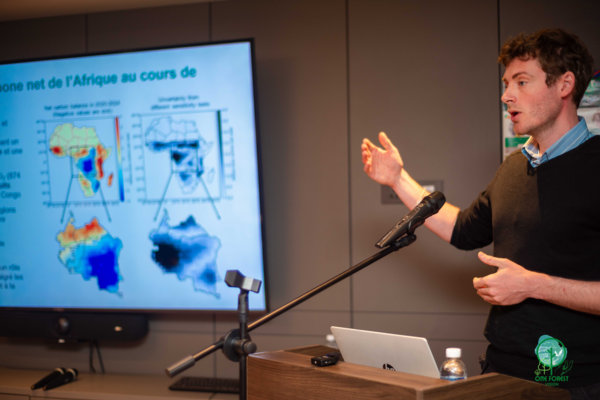
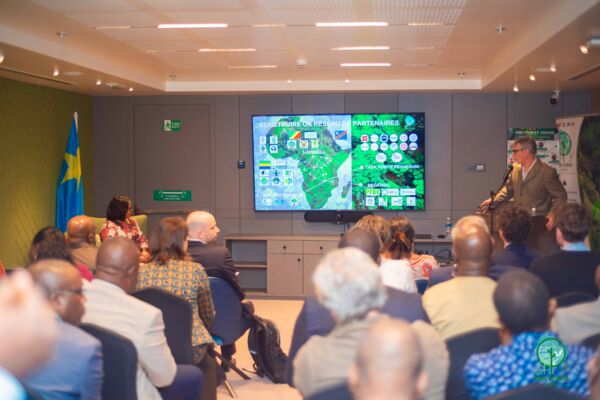
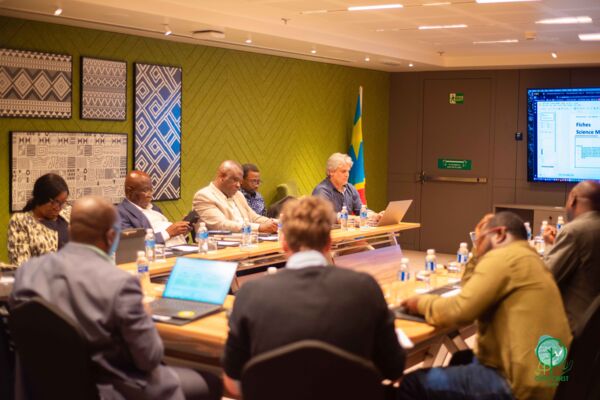
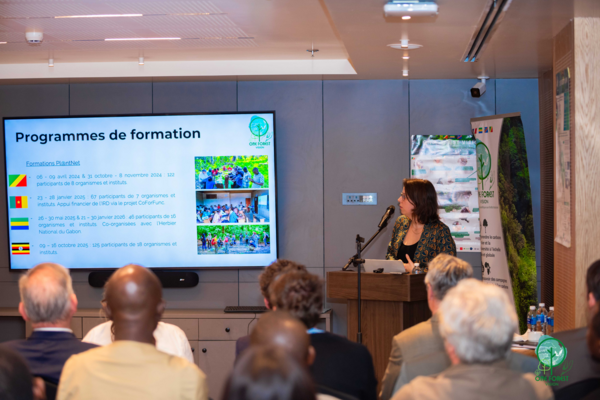
On 31 March and 1 April 2026, the One Forest Vision (OFVi) initiative organised a scientific co-creation workshop in Kinshasa, bringing together more than 60 participants, including around 40 who took part in thematic round-table discussions. Over the course of two days, researchers, technical experts and Congolese and international institutions worked collectively to identify scientific priorities for the Democratic Republic of the Congo.
The aim of this workshop was clear: to transform the discussions into a concrete roadmap, structured around the scientific needs expressed by national stakeholders.
A methodology focused on The workshop was based on a collaborative working method, combining Design Thinking, the Science Model Canvas and Operational Objectives and Key Results (OKRs). This approach helped to structure the discussions and produce directly actionable outcomes.
Divided into thematic groups, participants identified key data gaps, infrastructure needs and research priorities, whilst proposing concrete implementation strategies. Each group then presented its findings to the plenary session, enabling a collective consolidation of the results.
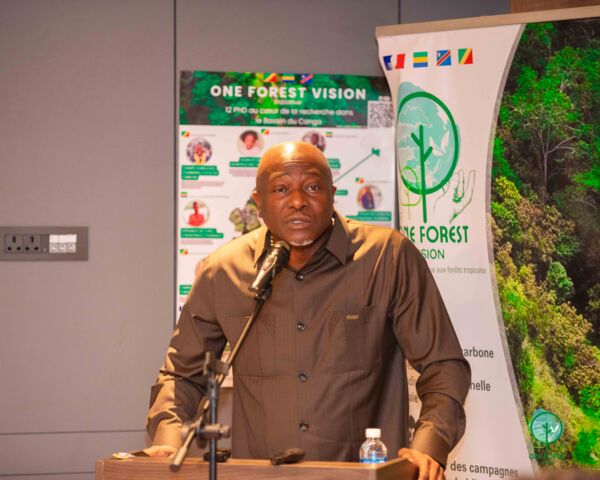
As Guillaume Lescuyer, co-coordinator of the initiative, pointed out:
“The aim is to set out a clear roadmap for the next three to five years in the DRC, addressing infrastructure, data and equipment needs, whilst strengthening scientific partnerships.”
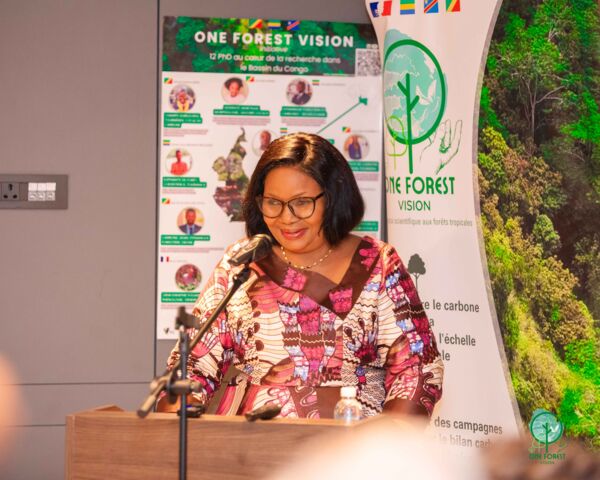
“Our collective ambition is clear: to ensure that the environment is not a natural constraint, but a driver of sustainable growth, geo-economic cohesion and shared prosperity,” said the Minister for the Environment, Professor Marie Nyange Ndambo.
2. Three round-table discussions to establish scientific priorities
The proceedings were organised around three round-table discussions, covering the major scientific challenges relating to the forest ecosystems of the Congo Basin:
Climate, water and carbon cycles The discussions highlighted the need to better quantify carbon fluxes (CO₂ and CH₄), particularly in forest and wetland systems. Strengthening measurement systems – flux towers, hydrometeorological stations, monitoring networks – was identified as a priority. Participants also emphasised the need to develop integrated modelling approaches capable of linking field observations with remote sensing data.
Ecology and Conservation This roundtable highlighted the importance of establishing a nationwide biodiversity monitoring system. Key requirements include the implementation of standardised inventories, the development of interoperable databases, and the integration of remote sensing tools. The aim is to improve our understanding of ecosystems and track their dynamics over time.
Forestry, agriculture and the science–society nexus The discussions identified ways to develop sustainable models that are tailored to local conditions. Participants highlighted the importance of payments for environmental services, responsible value chains and agroforestry approaches. The role of local communities was emphasised as a key factor in implementing these models.
3. Clearly identified technical and scientific requirements
Technical and scientific requirements As the discussions progressed, several cross-cutting priorities emerged. In particular, participants highlighted:
the need to deploy instrumented sites enabling the simultaneous monitoring of carbon, water and biodiversity,
the development of flux towers to measure exchanges between ecosystems and the atmosphere,
the integration of multi-scale remote sensing (satellites, drones, LiDAR),
the establishment of robust and interoperable data systems,
the strengthening of human capacity through the training of PhD students, engineers and technicians.
These elements form the foundation of a scientific framework capable of producing reliable and comparable data across the Congo Basin.identified
“The One Forest Vision initiative is a key driver. It should help to bridge the gap in scientific knowledge and place science at the heart of public decision-making,” said Professor Tosi Mpanu Mpanu, Senior Adviser to the Head of State.
The workshop laid the foundations for a scientific roadmap for the coming years. The priorities identified will focus on launching research projects, the gradual roll-out of measurement infrastructure, and the development of scientific partnerships.
The results of the roundtable discussions were compiled into a joint report (https://doi.org/10.5281/zenodo.20139161), which details the needs identified and the recommendations made by the participants. As Paul Forien pointed out:
“Our work is part of a shared strategic vision that is consistent with the DRC’s national priorities. But no ambitious strategy can succeed without a solid scientific foundation. That is precisely the aim of the One Forest Vision initiative.”
Beyond the technical outcomes, this workshop helped to establish a common framework for cooperation among the various stakeholders involved. The high level of engagement and the quality of the discussions led to a shared vision of scientific priorities, whilst laying the foundations for long-term collaboration.
This workshop thus represents a first operational step towards the roll-out of OFVi’s scientific activities in the DRC, with a clear ambition: to generate useful knowledge that can be directly applied to the management of forest ecosystems in the Congo Basin.
5. Next steps: strengthening dialogue with the Ministry of Planning
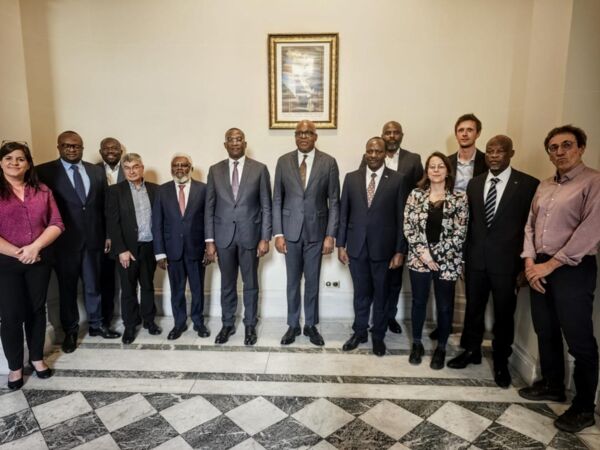
Building on this momentum, the One Forest Vision initiative has continued its discussions with the Congolese authorities. On 10 April 2026, a meeting was held at the DRC Embassy in Paris between representatives of OFVi and Mr Nyembo Mbwizya Guylain, Minister of Planning of the Democratic Republic of the Congo, in the presence of Ambassador Émile Ngoy Kasongo.
On the OFVi side, Philippe Ciais (CEA), Clément Delcourt (CEA) and Camille Lacroux (INRAE) presented the initiative’s scientific contributions to national priorities, particularly regarding the production of high-precision maps, support for carbon credit policies and the deployment of scientific tools (flux towers, theses, training).
The discussions also highlighted the importance of establishing a clear framework for cooperation between France and the DRC, to ensure the coordinated and effective implementation of OFVi activities. The Ministry of Planning was identified as a key partner to support this multi-sectoral initiative. The establishment of an OFVi–Minister’s Office working group was therefore announced, with the aim of developing a shared roadmap.
This initiative strengthens the link between scientific output and strategic planning, in the interests of better understanding and managing the forest ecosystems of the Congo Basin.
By browsing our site you accept the installation and use cookies on your computer.
Know more
Our use of cookies
Cookies are a set of data stored on a user’s device when the user browses a web site. The data is in a file containing an ID number, the name of the server which deposited it and, in some cases, an expiry date. We use cookies to record information about your visit, language of preference, and other parameters on the site in order to optimise your next visit and make the site even more useful to you.
To improve your experience, we use cookies to store certain browsing information and provide secure navigation, and to collect statistics with a view to improve the site’s features. For a complete list of the cookies we use, download “Ghostery”, a free plug-in for browsers which can detect, and, in some cases, block cookies.
You can also visit the CNIL web site for instructions on how to configure your browser to manage cookie storage on your device.
In the case of third-party advertising cookies, you can also visit the following site: https://www.youronlinechoices.com/fr/controler-ses-cookies/, offered by digital advertising professionals within the European Digital Advertising Alliance (EDAA). From the site, you can deny or accept the cookies used by advertising professionals who are members.
It is also possible to block certain third-party cookies directly via publishers:
Cookie type
Means of blocking
Analytical and performance cookies
Realytics Google Analytics Spoteffects Optimizely
Targeted advertising cookies
DoubleClick Mediarithmics
The following types of cookies may be used on our websites:
Mandatory cookies
Functional cookies
Social media and advertising cookies
These cookies are needed to ensure the proper functioning of the site and cannot be disabled. They help ensure a secure connection and the basic availability of our website.
These cookies allow us to analyse site use in order to measure and optimise performance. They allow us to store your sign-in information and display the different components of our website in a more coherent way.
These cookies are used by advertising agencies such as Google and by social media sites such as LinkedIn and Facebook. Among other things, they allow pages to be shared on social media, the posting of comments, and the publication (on our site or elsewhere) of ads that reflect your centres of interest.
Our EZPublish content management system (CMS) uses CAS and PHP session cookies and the New Relic cookie for monitoring purposes (IP, response times). These cookies are deleted at the end of the browsing session (when you log off or close your browser window)
Our EZPublish content management system (CMS) uses the XiTi cookie to measure traffic. Our service provider is AT Internet. This company stores data (IPs, date and time of access, length of the visit and pages viewed) for six months
Our EZPublish content management system (CMS) does not use this type of cookie.
For more information about the cookies we use, contact INRAE’s Data Protection Officer by email at cil-dpo@inra.fr or by post at:
INRAE 24, chemin de Borde Rouge –Auzeville – CS52627 31326 Castanet Tolosan cedex - France