

GEO-TREES / One Forest Vision Project – La Lopé Super-site (Gabon)

GEO-TREES / One Forest Vision project: from the field to data, improving the measurement of forest carbon in the Congo Basin

From 24 Mar. 2026 to 30 Apr. 2026

Libreville / La Lopé (Gabon)

As part of Pillar 1, ‘Carbon and Biodiversity’, of One Forest Vision, around twenty Gabonese and international experts gathered in Libreville for the launch of the GEO-TREES Gabon mission. Launched on 24 March 2026 with the arrival of a team of scientists from the CRBE (Centre for Research on Biodiversity and the Environment) and the CNRS (National Centre for Scientific Research) — including Jérôme Chave, Nicolas Labrière, Joseph Foé Mba and Ayala Loisel — this mission aims to produce baseline data, combining forest inventories and lidar technologies, in order to improve estimates of carbon stocks in the forests of the Congo Basin.

Bannière article.png
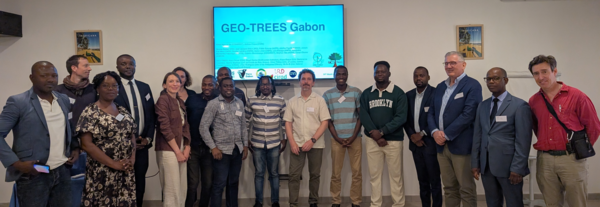
Photo des participants à l’issue de l’atelier de lancement GEOTREES Gabon à Libreville. © One Forest Vision - Elise AUGIER

1. A joint effort by the scientific community to roll out GEO-TREES in Gabon

On 25 March 2026, around twenty Gabonese and French experts gathered in Libreville to launch the activities of the GEO-TREES Gabon project, as part of the One Forest Vision initiative.

This meeting served as an opportunity to reiterate the project’s central objective: to improve the measurement of biomass in Gabonese forests by combining field inventories with ground-based and airborne lidar technologies, in order to estimate carbon storage capacities in a reliable and transparent manner.

Developed in collaboration with CENAREST (National Centre for Scientific and Technological Research), ANPN (National Agency for National Parks) and AGEOS (Gabonese Agency for Space Studies and Observations), the project is being implemented at three strategic sites in Gabon: Ipassa, Lopé and Mondah.

‘GEO-TREES is a model of scientific collaboration and a sustainable means of promoting our forests for the benefit of Gabon and the international community.’ Donald Midoko Iponga, Senior Research Fellow – IRET – CENAREST

The morning was divided into four parts. It began with an overview of the One Forest Vision initiative, presented by Jean-Jacques Braun (IRD). This was followed by a presentation of the GEO-TREES project and its methodologies, notably forest inventory protocols and the combined use of ground-based and airborne lidar, by Jérôme Chave (CNRS – CRBE). A feedback session on activities carried out at Ipassa, a research super-site, then illustrated the operational implementation of the protocols in the field, with a presentation by Adeline Fayolle (CIRAD). Finally, a review of the mission conducted at La Lopé in 2016 by Nicolas Labrière (CNRS) provided essential historical context for the re-inventory of the current plots.

Déjeuner convival Kickoff Geo Trees Gabon Tropicana (9).jpg
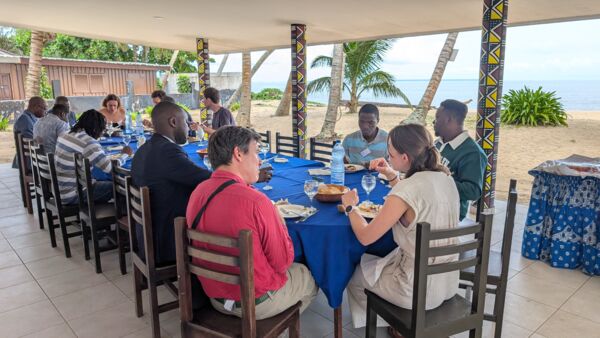
Déjeuner convivial après la réunion au Tropicana © One Forest Vision - Elise AUGIER

‘GEO-TREES represents a major technological breakthrough. The associated transfer of expertise is essential for the AGEOS teams. We look forward to continuing our work on lidar.’  Conan Vassily Obame, Director of Space Applications and Sciences

This session concluded with discussions with our national partners, notably Donald Mikodo (CENAREST), Stephan Ntié (ANPN) and Conan Vassily Obame (AGEOS), who highlighted the strong institutional support for the project.

GEO-TREES Gabon is not just a scientific project: it is a strategic tool designed to promote environmental sovereignty through knowledge and action. Stephan Ntié, Scientific Adviser to the ANPN

The day concluded with a lunch on Tropicana Beach, providing the perfect setting for informal discussions and for strengthening ties between partners.

Déjeuner convival Kickoff Geo Trees Gabon Tropicana (4).jpg
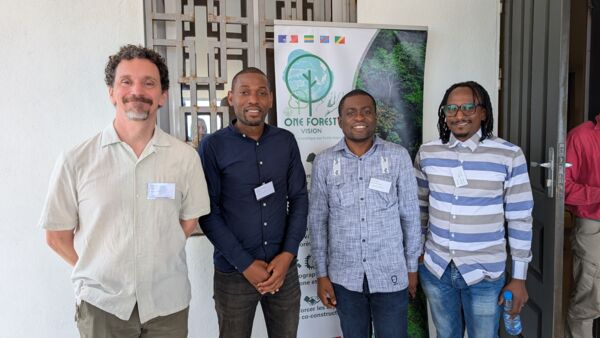
Jérôme Chave (à gauche) et une partie des participants à la réunion de lancement du projet GEO-TREES Gabon : Conan Obame de l’AGEOS, Rodrigue Ambouda et Davy Ngueba Ikapi du CENAREST. © One Forest Vision - Elise AUGIER

2. Strengthen the links between science, public policy and society

Alongside the launch of the GEO-TREES Gabon project, the coordinating team held a number of institutional meetings in Libreville.

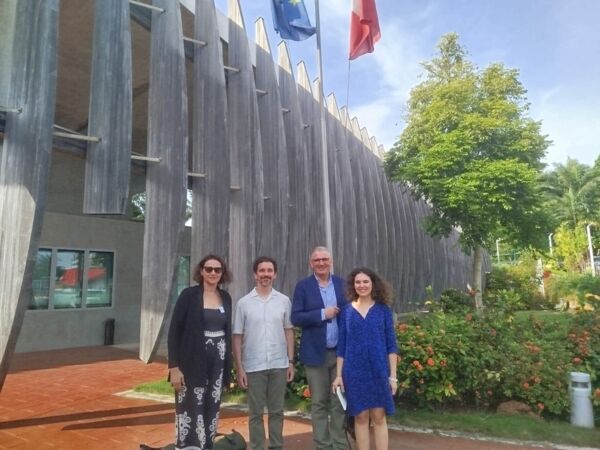
Discussions took place in particular with the French Embassy in Gabon, attended by Eva Desthieux, Environmental Adviser, with a view to strengthening synergies between scientific research and public policy in support of the forests of the Congo Basin.

WhatsApp Image 2026-03-26 at 10.51.39.jpeg
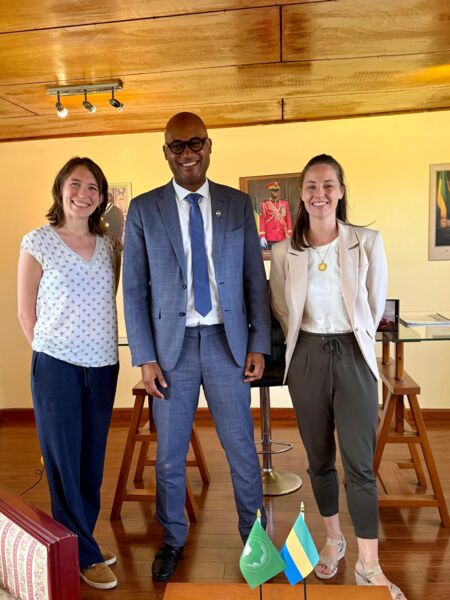
Rendez-vous institutionnel à l’Ambassade de France au Gabon. © Ayala Loisel


The team also visited the Léon Mba Institute, alongside Adrien W. N’Koghe Mba, to strengthen the link between science and society and to encourage the next generation of ambassadors, committed to protecting the Congo Basin, to pursue careers in science.

The meeting also provided an opportunity to present the Wany app, a digital platform that connects young people across Africa around sustainable development issues, in line with the United Nations Sustainable Development Goals and the aspirations of the African Union. Find out more: https://www.wany.co/

WhatsApp Image 2026-03-30 at 18.10.00 (1).jpeg
VIsite de l’Institut Léon MBA avec Adrien W. N’Koghe Mba © Adrien W. N’Koghe Mba


3. Field data at the heart of climate issues

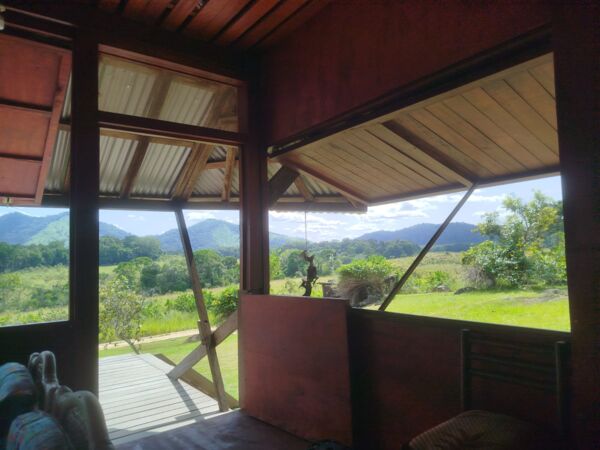
From 26 March, the teams travelled to Lopé National Park and the Gorilla and Chimpanzee Research Station (SEGC) managed by the ANPN, a key site for the project, to prepare and launch field operations. Following a phase of setting up camp, surveying the plots and coordinating logistics, the scientific campaign officially began on 30 March.

The main objective of the mission is to carry out a re-inventory of permanent forest plots, enabling the monitoring of forest dynamics over time: tree mortality, new growth, species identification, diameter measurements and height estimates.

This field data is combined with cutting-edge technologies, notably ground-based and airborne lidar, to produce reliable aerial forest biomass maps that will be available on the website data.geo-trees.org. This information is essential for estimating carbon stocks and better understanding the role of the Congo Basin’s forests in climate regulation.

Deployed at several strategic sites in Gabon — Ipassa, Lopé and Mondah — the GEO-TREES project is part of an open, transparent and collaborative scientific approach, based on standardised protocols and long-term observation networks.

WhatsApp Image 2026-03-31 at 11.43.42 (1).jpeg
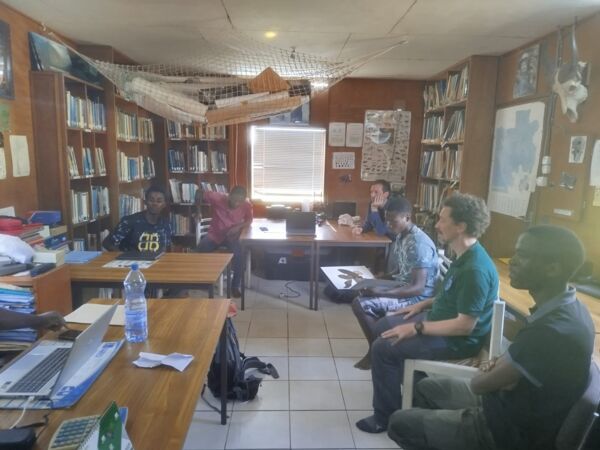
Visite de l’herbier et des parcelles forestières duSuper-site La Lopé © Ayala Loisel


4. A concrete example of the ambitions of the One Forest Summit

Three years on from the One Forest Summit, this mission provides a concrete example of how the scientific commitments made in Libreville are being put into practice: generating robust data, building local capacity, and supporting decision-making on conservation and climate issues.

Through One Forest Vision, Gabon is reaffirming its role as a leading nation in the understanding and preservation of tropical forests, which lie at the heart of environmental challenges.

WhatsApp Image 2026-03-31 at 11.43.42 (2).jpeg


Sans titre (2000 x 200 mm) (10).png